Sunday, May 22, 2011

Alexa - Tuesday


Today we began our work on the greenhouses first thing in the morning and worked straight through until lunch. We were working on the greenhouse for a man in the village who is unable to work, making this project especially important. It was difficult work because we had to make barro and then use it to make the walls of the greenhouse out of adobe bricks. Last night, we had decided to try working as one big team instead of splitting up into groups of two or three. After some time, we discovered that this was a better plan, because we managed to get more work done in a shorter amount of time. Also, this allowed us all to learn the importance of teamwork. Each person had their own job, enabling everyone to participate in the project and feel as though they were helping. Using this system, we managed to complete a good part of the walls of the greenhouse by lunchtime. This was only about four hours, making it a successful day.
After lunch, we were scheduled to have Quechua classes in the school, but some of the group misheard the meeting time, and so were late. The boys thought we were supposed to meet at two in the school, when it was really half an hour earlier. When Lucy, Sachi, and I showed up at the school and the boys weren’t there, we decided to go up and get them. While we were gone, the director of the school, who was going to teach us for the day, came and said he could not wait for all of us to show up since it was already past the scheduled time. This was an important lesson for all of us about the importance of communication. This simple error in communication ruined one of our activities. As the boss of the day, I learned that I need to make sure that everyone has the correct information and that I should double check that the entire group is ready before heading to the activity.
After this confusion, we went to the house of Mama Adela and Visser to learn how to tejer. This is the weaving that the women of the Awamaki create. Several of the women came and helped us all make our own creations, including bracelets and belts. At first, it was difficult to do, but after some practice it became easier. I made a belt that, with the help of one of the women, has my name on it. It looks really cool and I’m glad I had the chance to learn how to tejer. The entire time, multiple people came in and out of the house to chat with the family and us. It was then that I was able to see how close-knit and caring the community of Patacancha really is.

Kenny - Monday


Today was our first complete day in Patacancha, Peru, which is where we are building the greenhouses. At breakfast we ate some really interesting food, I’ll leave it at that. This is our first day working and as leader I get to decide the groups of two. I take Alexa, Gio gets Sachi, and that leaves Lucy and Henry. Alexa and I stay working on a greenhouse that is almost completely done; it was just missing a few things such as the plastic cover and the PVC pipes that hold up the plastic. I end up going with Valerio (owner of the greenhouse) to get the plastic, which was in another home that was quite far away. The plastic was pretty heavy and its hard protective casing dug into my shoulder. Rewardingly Valerio and I managed to climb up with the plastic. Oh, it’s hard to breathe; I forgot to mention that. Adela and the other people are trying to figure out ways to efficiently put on the plastic. Due to the language barrier cause by Quechua, the native tongue, Alexa and I are just sitting there doing nothing but at the same time trying to understand what they are saying. I realize that we are wasting time; therefore I ask Adela if we can go to another greenhouse to see what the other LFA students are up to. Mr. Visser gives me the choice of picking either Gio or Sachi to stay with Alexa and I. I chose Gio because when it comes to physical labor, he would be more of a help to me than Sachi. We start digging up the dirt that will be used to stick the adobe bricks together. Pretty much the day was successful; we got a good amount of work done. Henry, Gio, and I spent the night talking about all sorts of things without the interruption of a computer, a text, or any another technological equipment that we depend on as a society. It was really awesome to hear what they had to say and just seeing that it took being 5000 miles away from home, in the middle of nowhere, to hear some of the things I did was totally worthwhile. Visser told us Peru would change us or have an impact on us and I think that statement really made sense by the time I went to bed. I learned to appreciate what I have in my life and after 4 years of hanging out with Gio and Henry, I had never thought our conversations were as real as tonight’s conversation.

Henry - Sunday


Although the journey was less than enjoyable, our arrival in Peru has left us awe-struck. Our first days in Ollantaytambo, Peru have been filled with bucket list worthy experiences from eating delicious native meals to climbing mountains and witnessing the Incan relics that have been so delicately preserved by the town of Ollantaytambo. The town is a perfect example of the preservation of culture with the adequate amount of modernization; one can live comfortably while still showing the proper respect to the ancient civilizations that once thrived on the same land. When entering the town, one can’t help but to gaze at the wondrous surroundings. The breathtaking mountains create a kind of a barrier that almost seems to capture the town’s natural charm. Travelers are more than welcome as there are more than enough cozy hotels or hostels for one to reside in during their stay. Our stay in Peru so far has been nothing short of amazing in terms of catching a glimpse of a beautiful part of the world that has often gone unrecognized.

Friday, May 20, 2011

We're Back

Just a short note to let everyone know that we have returned safely from Patacancha. Everyone is in good spirits and excited to visit Machu Picchu tomorrow. Many exiting blog posts to come!

Saturday, May 14, 2011

Living History

Today LFa students hiked the city of Ollantaytambo and the surrounding area, learning about how the Incas built the city. Much of Ollantaytambo is exactly how it has been for over 500 years, and families still live in houses built by this great civilization.


Here Adela is teching about the use of grain storage buildings in the mountains high above Ollantaytambo. Allthough they do not appear in the photo, these buildings were used as natural refrigerators for corn and other grains.

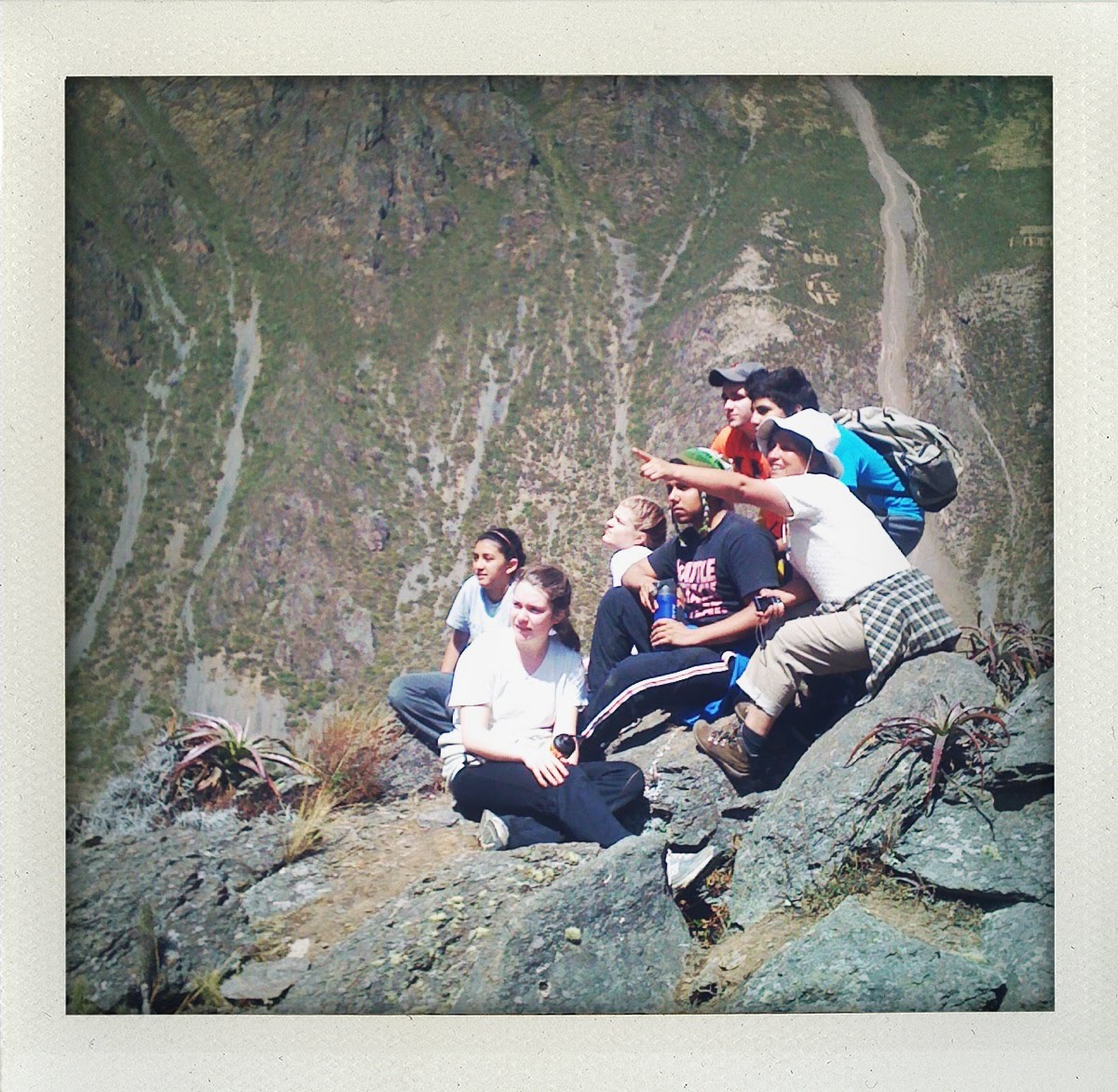
here is a good photo of the first of what will be many hikes in the mountains of the sacred valley. They are adjusting to the altitude well.

Tomorrow we head up the mountain to Patacancha...

Friday, May 13, 2011

Safe and Sound


LFA students arrived in Ollantaytambo this afternoon after about 24 hours of traveling. They are tired but excited and getting used to the altitude. Check back in a few days for more updates!

Sunday, May 1, 2011

Getting Ready for our Third Trip!

May has come back around again, which means a new group of students is preparing for their trip to Patacancha! They have been fundraising for our new greenhouse project by selling Smens and Smencils (writing utensils with pizazz).
The greenhouse project is designed to increase the variety of food that the villagers of Patacancha can grow. Because of the extremely high altitude (higher than Macchu Picchu!), the native people are unable to grow various vegetables, and as a result, suffer from malnutrition.

Also, we would like to acknowledge everyone who came to the North Shore United Methodist Church in Glencoe for our presentation. We had a wonderful audience. Thank You!